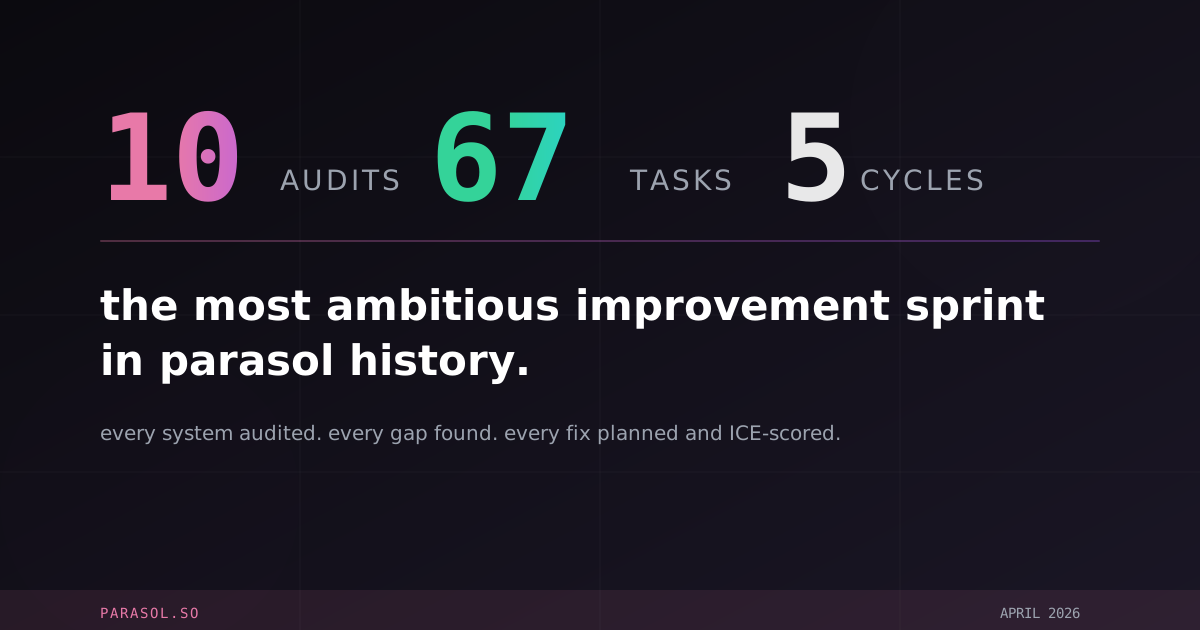
10 audits. 67 tasks. the most ambitious improvement sprint in parasol history.
we don't ship features and move on. we audit everything, find every gap, and fix them systematically.
this week we ran the most thorough review in parasol's history. 10 parallel deep-dive audits covering every system, every trade path, every point calculation, every referral flow. we brought in four distinct evaluation perspectives and went line by line through the entire codebase.
here's what we found, what we're building, and exactly how we're going to execute it.
the audit: how we did it
most teams do a single code review and call it a day. we ran 10 parallel audits, each focused on a different system, and cross-referenced the findings.
the four perspectives
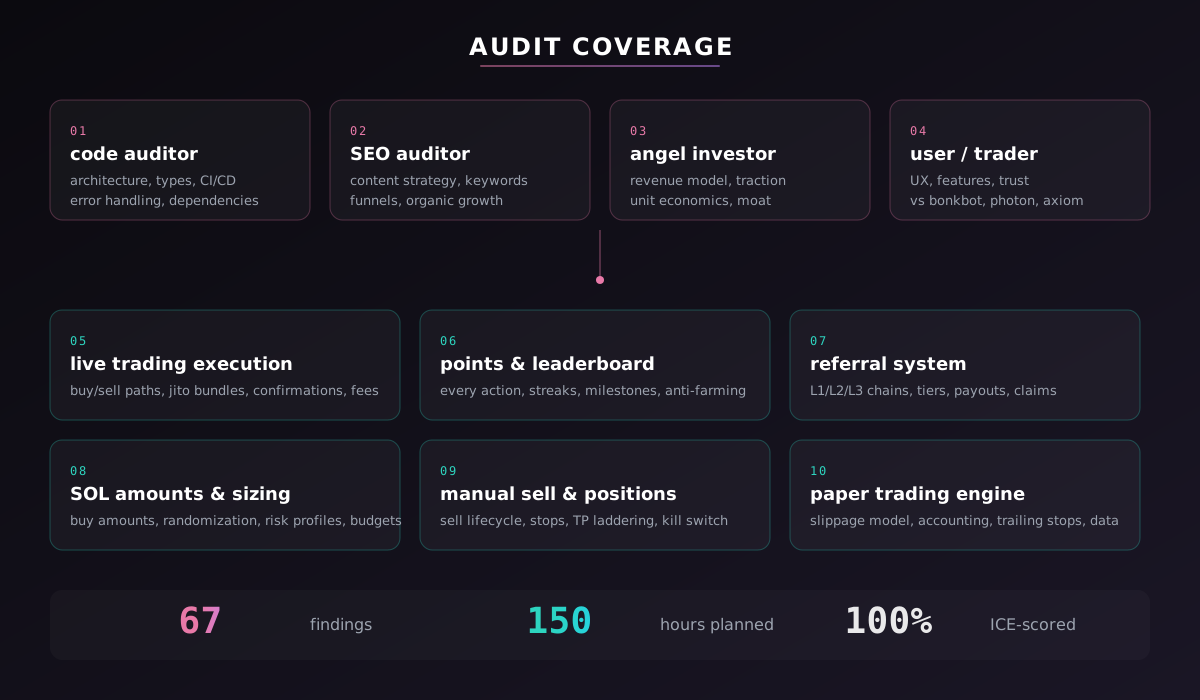
we evaluated parasol from four completely different angles:
1. code auditor. Github-level code review. architecture quality, type safety, error handling, dependency health, CI/CD pipeline, and infrastructure patterns.
2. SEO auditor, ogilvy-standard content review. technical SEO, keyword targeting, conversion funnels, content strategy, and organic growth potential. result: 78/100 with clear gaps to close.
3. angel investor, $50-100K seed evaluation. revenue model, traction metrics, competitive positioning, market sizing, unit economics, and what needs to happen before a check gets written.
4. user/trader, real solana trader evaluation. UX, feature completeness, trust signals, and head-to-head comparison against bonkbot, trojan, photon, axiom, and bullx.
the six system audits
then we went deeper. six focused audits on the core systems that matter most:
| audit | what it covered |
|---|---|
| live trading execution | every buy and sell path, transaction confirmation, jito bundle handling, multi-path fallback cascades, fee collection |
| points & leaderboard | every point-earning action, streak calculations, milestone triggers, daily rewards, anti-farming measures |
| referral system | code generation, L1/L2/L3 commission chains, payout calculations, tier progression, claim flows |
| SOL amounts & sizing | user-configurable buy amounts, position sizing, randomization logic, risk profile enforcement, budget tracking |
| manual sell & positions | full sell lifecycle, stop-loss execution, take-profit laddering, kill switch behavior, cold-start recovery |
| paper trading engine | slippage modeling, portfolio accounting, trailing stop calculations, data persistence, strategy-specific exits |
67 findings. prioritized by impact. organized into 5 execution cycles.
what the audit confirmed: the engine is strong
before we talk about improvements, here's what the audit verified is working correctly:
the core trading intelligence is real. what we're improving is everything around it.
the plan: 5 cycles, 10 weeks
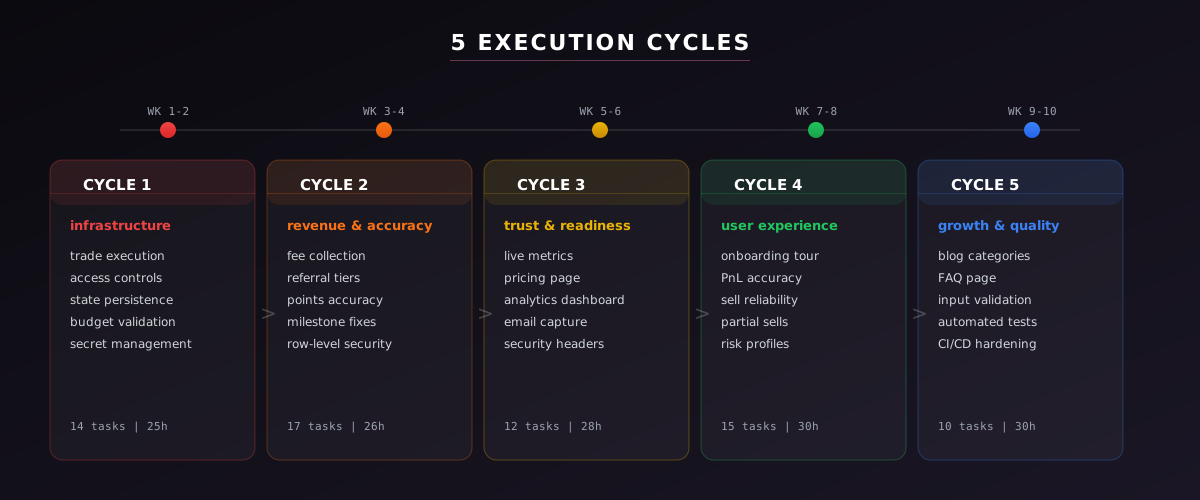
we organized all 67 tasks into 5 two-week cycles, each with a clear theme and measurable outcomes.
cycle 1 (weeks 1-2): core infrastructure hardening
the foundation everything else builds on.
cycle 2 (weeks 3-4): revenue & accuracy
making sure every number in the system is correct.
cycle 3 (weeks 5-6): trust & investor readiness
proving the product works.
cycle 4 (weeks 7-8): user experience
making the product feel solid and intuitive.
cycle 5 (weeks 9-10): growth & code quality
building for the long term.
the research: why we're building it this way
we didn't just list tasks and start coding. we researched the best project management methodologies used by elite tech teams to make sure this plan is executed properly.
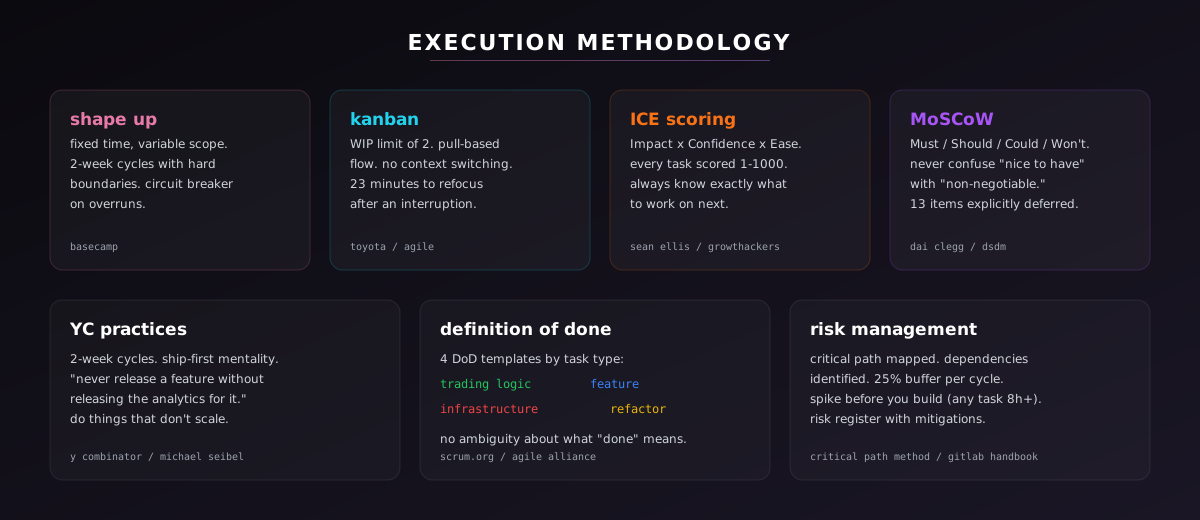
shape up (basecamp)
the core principle: fixed time, variable scope. each cycle is exactly 2 weeks. if work doesn't fit, we cut scope. We never extend time. this prevents any single task from consuming the entire project.
we also use shape up's circuit breaker: if a task isn't done at cycle end, it doesn't automatically continue. we stop, reassess, and decide whether to re-invest or pivot.
kanban for focus
WIP limit of 2. maximum 2 tasks in progress at any time. context switching is the #1 velocity killer for small teams. this is backed by extensive research. It takes 23 minutes to refocus after an interruption.
ICE scoring
every task scored on Impact x Confidence x Ease (each 1-10, max score 1000). this means we always know exactly what to work on next. the highest-impact, highest-confidence, easiest-to-ship items go first.
MoSCoW prioritization
every task categorized:
YC product development practices
we studied how Y Combinator batch companies manage product development:
definition of done
four different checklists depending on the type of work:
critical path method
we mapped dependencies between all 67 tasks to identify which ones block everything else. items not on the critical path have "float"; they can be parallelized or deferred without slowing the project.
risk register
every major risk identified upfront with likelihood, impact, and mitigation strategy. no surprises.
the numbers
| metric | value |
|---|---|
| parallel audits conducted | 10 |
| total findings | 67 |
| execution cycles | 5 |
| cycle length | 2 weeks |
| total timeline | 10 weeks |
| usable hours budgeted | 150 (with 25% buffer) |
| tasks ICE-scored | all 67 |
| tasks MoSCoW-categorized | all 67 |
| definition of done templates | 4 |
| items explicitly deferred | 13 |
what's explicitly deferred (and why)
transparency means telling you what we're not doing too:
| feature | why it's deferred |
|---|---|
| copy trading from leaderboard | major feature. Needs its own dedicated cycle |
| telegram bot | major feature, needs its own cycle |
| mobile native app | needs design phase first |
| orchestrator refactor | multi-day effort. Planned as standalone cycle after this sprint |
these are on the roadmap. they're just not in this sprint. listing them explicitly prevents scope creep; one of the most common reasons tech projects fail.
what this means for you
if you're a current user: the product you're using today will get meaningfully better every two weeks. trading reliability, point accuracy, and the overall experience are all being upgraded systematically.
if you're waiting for access: we're building the foundation for a product that's ready for scale. every improvement makes parasol more reliable, more accurate, and more trustworthy.
if you're an investor or partner: we're approaching product development with institutional-grade rigor. every task has acceptance criteria, every cycle has measurable outcomes, and every risk is identified upfront.
follow along
we'll publish a progress update at the end of each 2-week cycle with:
no vanity metrics. no vague roadmaps. just what we built, whether it worked, and what's coming.
this is how you build a trading platform people can trust.
less noise. more alpha.