product updates: march 21, 2026
referral payouts fully working, sign-up flow hardened, live exits refined, manual sells fixed, profit cards made honest, agents kept busy. below is what shipped.
referral payouts: tested end to end, claiming works
the referral programme and volume kickbacks are fully tested and live. tiered commissions accrue on every trade your referrals make, and claiming those earnings now works 100% on-chain. hit the claim button in your referral tier section, the SOL lands in your wallet. no manual settlement, no pending states. the full loop, trade → fee split → accrual → claim → on-chain transfer, has been verified from first trade to final withdrawal.
if you run a community, share content, or just know other traders: your referral code is free money. every trade they execute earns you SOL, every tier you climb raises your rate.
sign-up and wallet security: fewer surprises
wallet login had a bug where returning users could accidentally create a duplicate account if their original onboarding did not link a phantom wallet. the login flow now checks trading wallets and linked wallets across the database before creating anything new, and auto-links phantom as the identity wallet on reconnect so future logins always find the right account.
more importantly: seed phrase warnings are now front and centre. the profile page and wallet security section show a clear prompt to export your seed phrase before depositing any funds. parasol wallets are secured by turnkey MPC, your key never touches our servers, but if your browser data is cleared and you have not backed up your seed phrase, recovery is not possible. the warning now appears the moment you land on your profile, with a direct link to the export flow. back up first, fund second.
live trading: exits that breathe
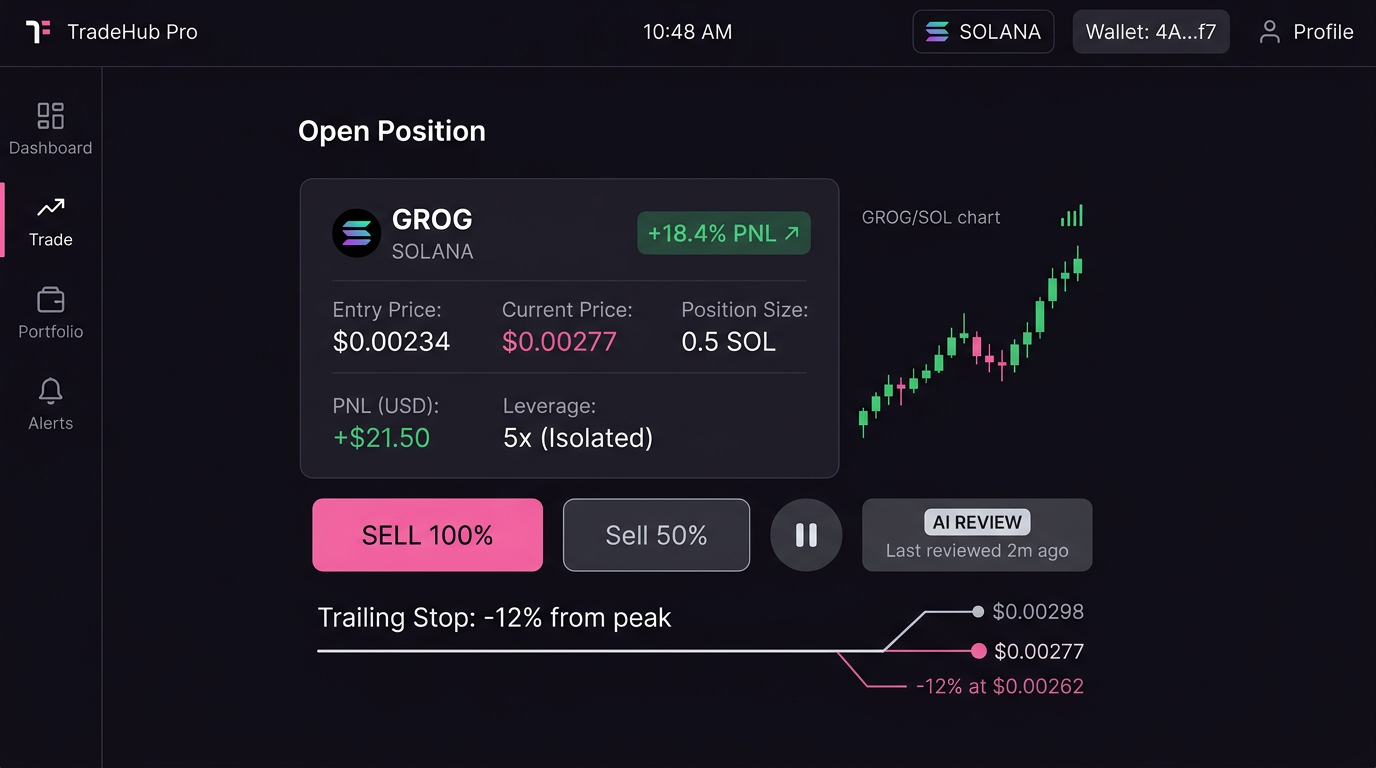
live mode was sometimes stopping out faster than paper; volatility could trip a stop before the position had room to settle. the paper engine already had a grace window and a short confirmation delay before a stop counted. that logic now runs on the client for live positions too.
same discipline. fewer false exits.
per-user randomization: same scan, different path
when every user traded the same tokens in the same order with the same sizes and levels, the system was easy to game. we added deterministic randomization keyed to each agent id so behaviour stays stable for you across refreshes but diverges between users.
the goal is protection without chaos: still the same pipeline, still the same risk framework, less single-path predictability.
manual sells: the percentage you chose
partial manual sells could sell far less than the percentage on the button. the fast path used a percentage of a sub-balance rather than the full wallet holding when extra size had been added outside that path. manual sells now skip that path and use the balance-aware route so 50% means 50% of what you actually hold.
profit cards: numbers you can trust
profit cards used the agent's recorded entry. if you doubled a position manually, the card could still show the original buy and a misleading percentage. when you open a card from history, we now pull swap-level totals from chain (buys vs sells in SOL for that mint) when the data is available, and label it clearly. if verification is still loading, you see a short state before we fall back to the local estimate.
agents that keep finding trades
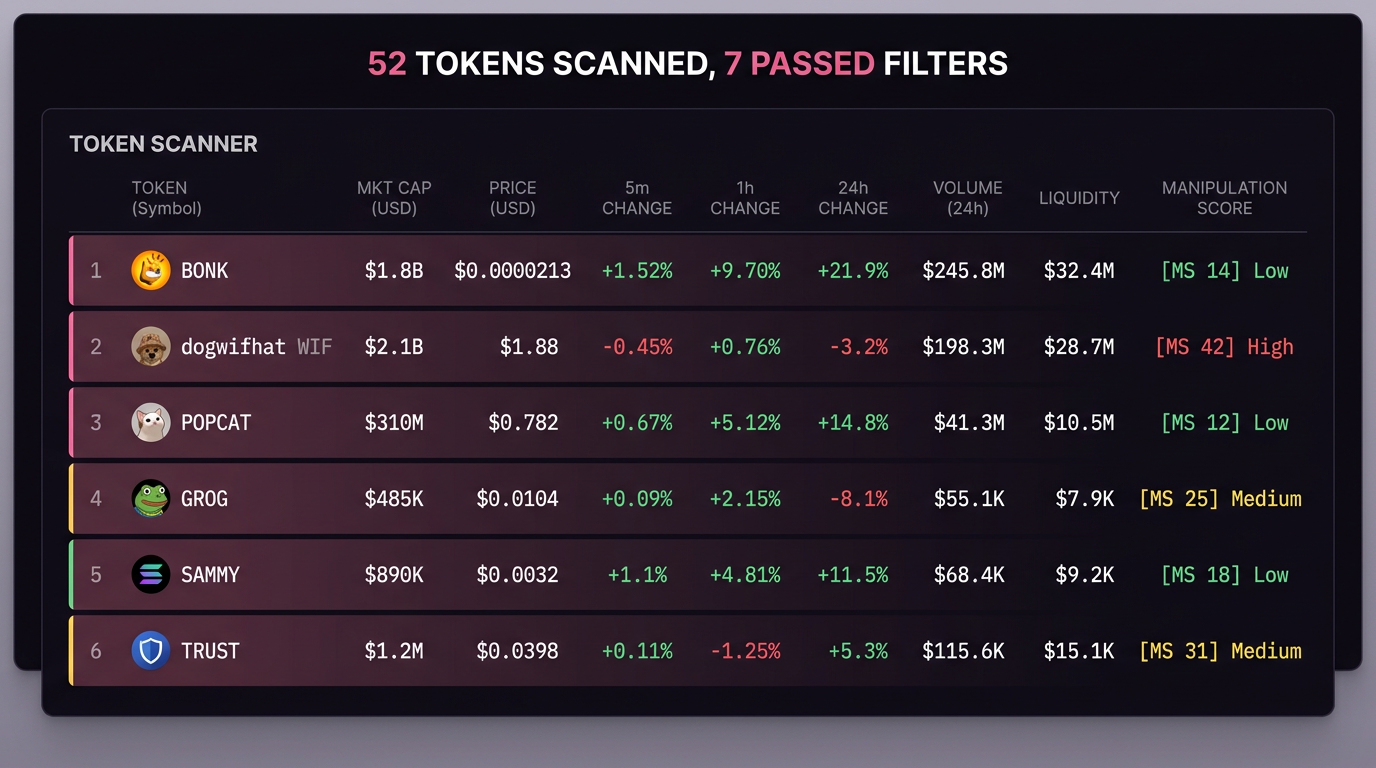
after a busy first hour, some agents looked like they had nothing left to buy. overlapping timers were blocking almost every token the scanner kept returning: a long "recently attempted" window, aggressive cross-agent cooldowns, and a multi-hour re-entry lock after a close. we shortened those windows to match how fast memecoin markets move, and we only mark a token as "attempted" after a real open try, not when we skip it for a dead price quote or a size that is temporarily too small.
result: fewer empty cycles, more real opportunities, without removing the guardrails that stop pile-ins and instant re-buys into the same failed setup.
auto-sells: no more silent timeouts
automatic exits sometimes failed and left tokens sitting in wallet holdings with no obvious on-chain attempt. the sell flow chains several venues and can run longer than a default serverless limit. the trading API route now allows enough time for the full sequence. lightning sells that return a transaction signature are treated like our jupiter path: submitted means success for exit purposes, so we do not double-sell while waiting for confirmation. jupiter confirmation waits on sells are tightened so fallbacks still have room to run inside the budget.
if a sell ever fails, retries and write-off logic in the client still apply, but the server should far less often die mid-flight.
what to do on your side
[LIVE] Close failed lines if something still sticks. That text is the real error from the serverclosing
this batch is about trust (referrals paying out, seed phrase safety), accuracy (sells, pnl, exits), fairness (randomization, cooldowns), and reliability (auto-sell timeouts, login deduplication). parasol still does what it always did: scan, filter, score, execute, protect. these changes make the live experience closer to what the engine intended, and harder to front-run as a single shared playbook.
it sees what you can't.