everything we've learned about a market designed to take your money

10,400 tokens launch on Solana every day. 98% of them die. Of the ones that move, most are moved on purpose, by someone who planned your exit before you found the chart.
That is the market. Not a casino — casinos are random. This market is worse than random, because the outcomes are arranged. The good news is that arranged outcomes leave evidence. Bundles leave funding trails. Botted volume leaves mechanical candles. Copies are always slightly worse than their originals. If you know where to look, the trap describes itself.
This guide is everything we look at before Parasol's engine risks a single dollar, written for a human doing it by hand. It is long because the market is hostile. None of it is financial advice. All of it is a description of a machine.
One idea sits underneath everything here, so we will say it first: trade management is indefinitely more important than your entry. You can enter badly and manage well and survive. You can enter perfectly and manage badly and lose everything. Keep that ordering in mind while you read, because most people spend all their attention on the part that matters less.
part one: know what you're trading against
the bundle
Most traders lose to bundles before the chart even loads.
A bundle is simple: the deployer, or someone adjacent to them, buys a large share of the supply at launch through a web of wallets that look unrelated. The chart then shows "organic" buying. The holder list shows healthy distribution. Neither is real. One entity is sitting on 30, 40, 60 percent of the float, waiting for you to provide exit liquidity.
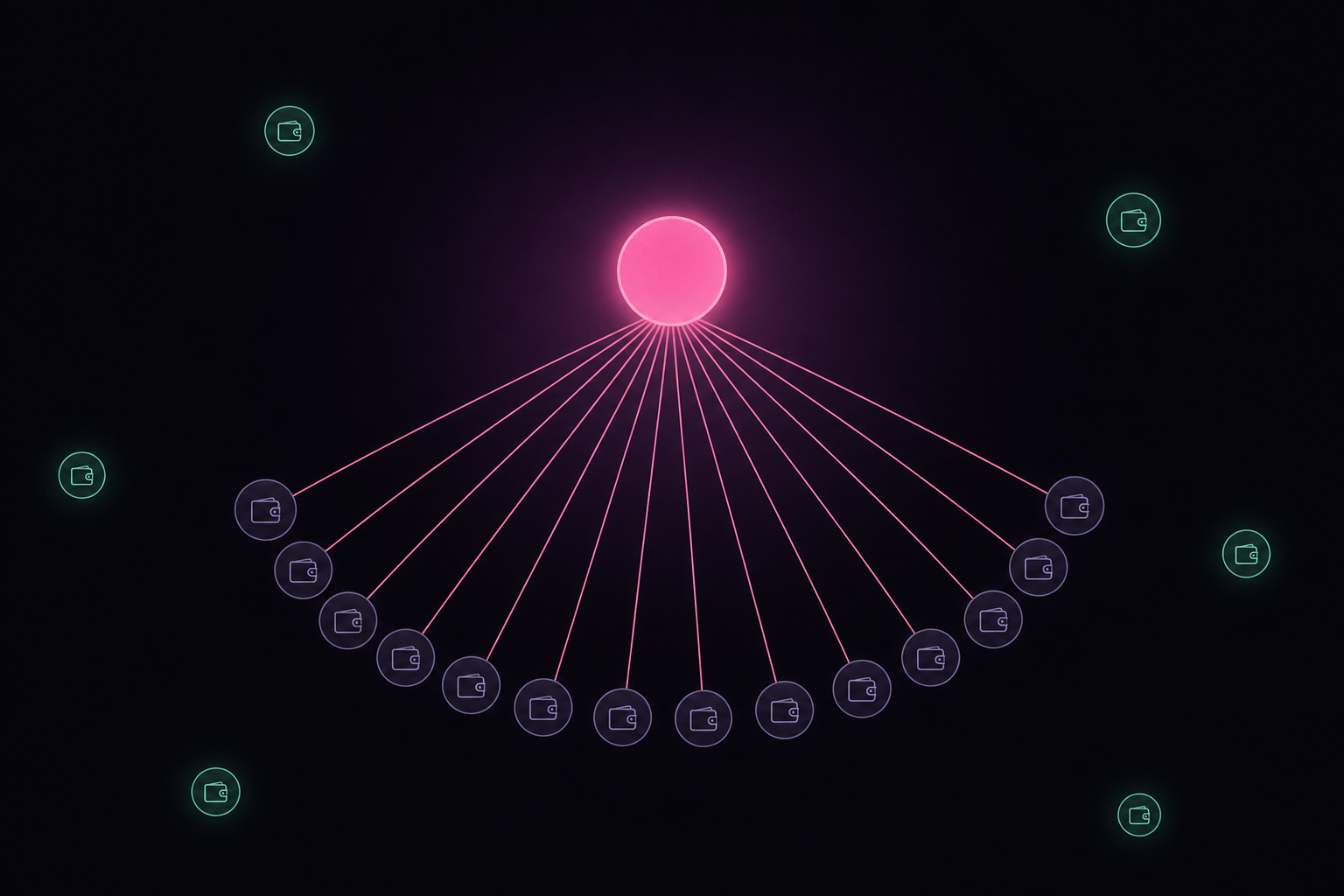
The wallets look separate. The funding does not. Trace where the top holders received their first SOL and the fan collapses to a single point. That picture — one source, many hands — is the single most common structure behind the coins that go up beautifully and then to zero instantly.
What to check, in order:
the volume tell
Here is a rule that filters more traps than any other single number: on a young coin, compare 24-hour volume to market cap.
A genuinely traded coin churns. Holders exchange, people take profit, new people enter. On a healthy young token, daily volume usually runs near or above its market cap. When a coin is a few hours old, sitting at $400K market cap with $150K of volume, ask yourself what that means: the supply has not changed hands. The people who hold it got it at the start and never sold. They are not diamond hands. They are one entity in profit, waiting.
Volume below roughly 80% of market cap on a young coin is a caution. Below half, walk away.
the fee tell
On pump.fun, trading generates creator fees, and fees cannot be faked cheaply. A coin at $15K market cap that got there through real trading will have paid its creator around half a SOL or more in fees. A coin at the same market cap with a fraction of that has a market cap built from bundled buys and botted wash volume — price without trading. The fee counter is one of the few numbers in this market that costs real money to inflate. Trust it more than the chart.
part two: read the chart like a machine wrote it
Because sometimes a machine did.
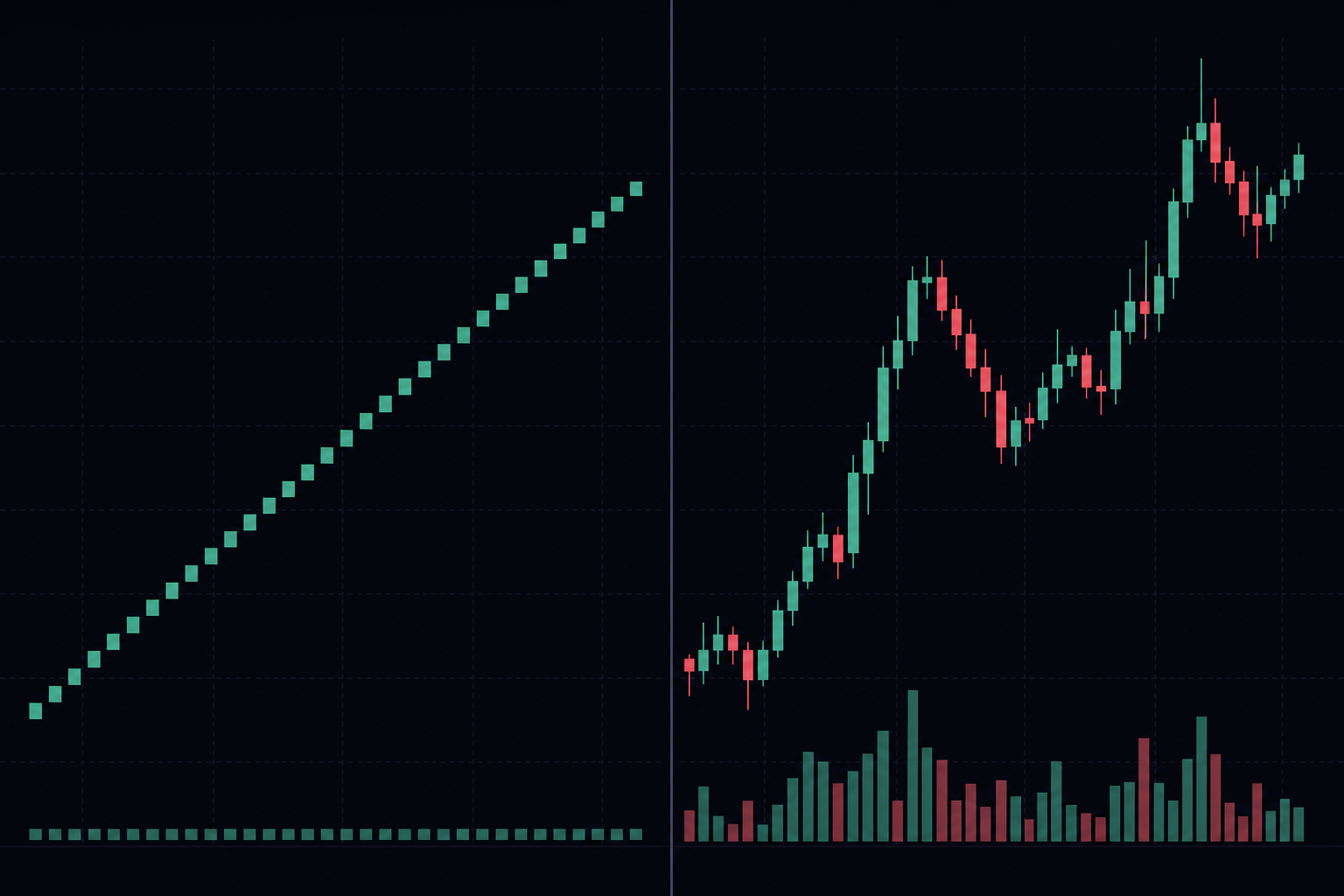
Real markets are irregular. Real buyers come in different sizes, at different moments, with different conviction. When you see order where there should be noise, someone is manufacturing the order. Three patterns to memorise:
One of these is a caution. Two or more, close the tab.
part three: the vamp
Every meme that works gets copied within hours. The copy is called a vamp, and it exists to drink the original's attention.

The mechanics are predictable. A coin starts running. Someone deploys the same name, the same image slightly compressed, the same ticker with a suffix. Buyers who missed the original see a "cheaper" version of the thing that is pumping and convince themselves it's the second chance. It is not. It is a container for their money, built in twenty minutes, feeding off a story someone else wrote.
Separating the original from the copy takes about two minutes:
If a canonical original exists — older, more fees, more holders — the newcomer needs to clear a far higher bar before it deserves a dollar. Usually it doesn't clear it. The runner keeps running. The vamp fades back into the range it came from. We have watched this exact movie enough times to publish a case study on it.
part four: structure, and when a chart starts to mean something
A five-minute-old chart is noise. There is no support because nothing has been supported, no resistance because nothing has been resisted. Price gets memory only after enough people have made decisions at enough levels — roughly an hour of real trading, sometimes more.
After that, structure is the whole game:
The rule that follows from this costs you a little upside and saves you from catastrophe: late confirmation beats early hopium. never buy into a confirmed downtrend because you have a feeling. wait for the structure to actually break upward. you will miss the exact bottom every time, and you will also miss the coins that never bottomed at all.
the entry zone
When a coin impulses up and then pulls back, most people either chase the top or panic at the retrace. There is a third option: measure it.
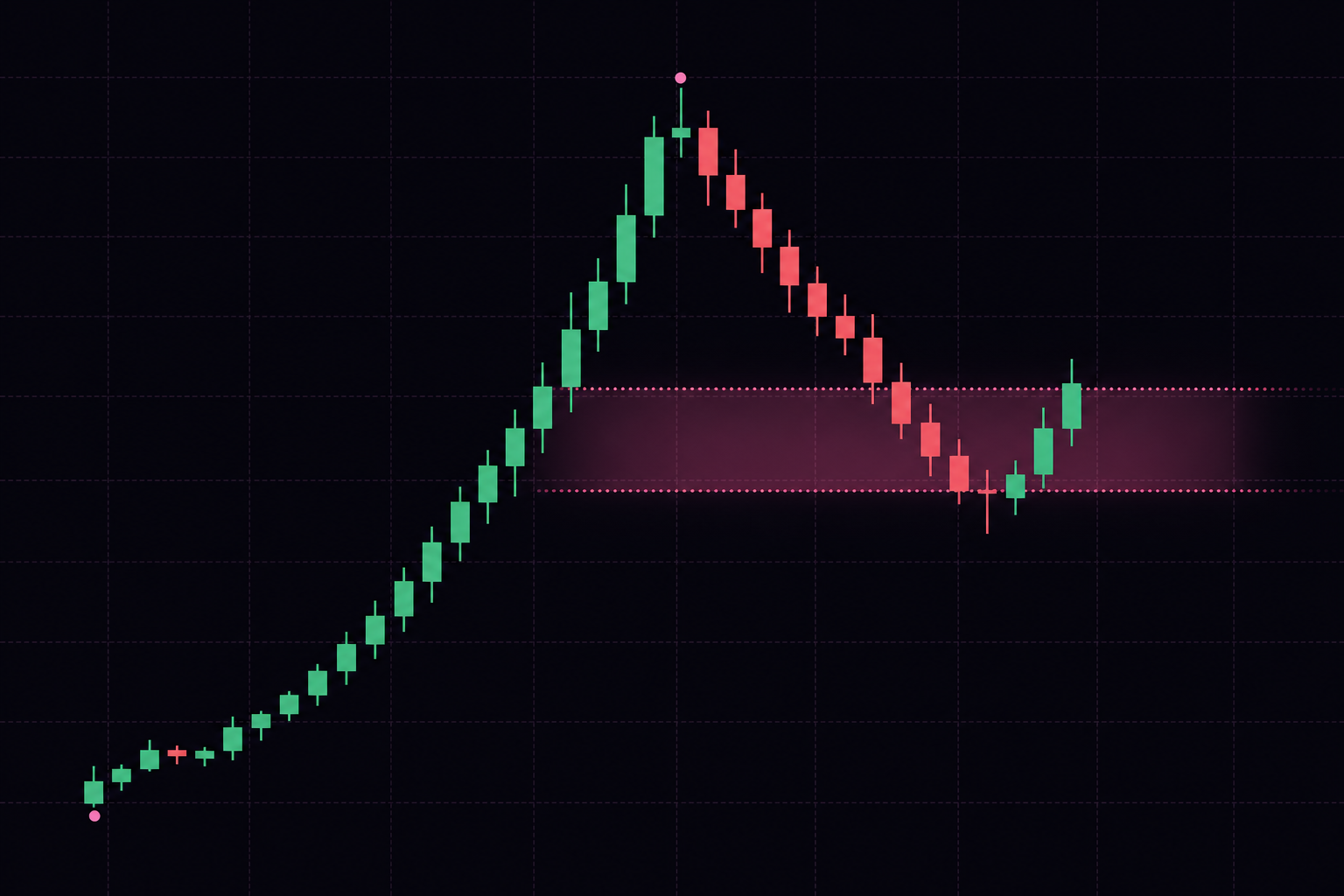
Take the impulse from its swing low to its swing high — and on low caps, anchor to candle bodies, not wicks, because wicks on illiquid coins are lies told in half a second. The zone between the 0.5 and 0.786 retracement of that move is where healthy pullbacks end. Price entering that band, slowing, and turning is one of the highest-quality entries this market offers: you're buying the trend at a discount, with a built-in line in the sand.
The line in the sand matters as much as the entry. A close below the 0.786 level means the retracement thesis is dead — that's not a pullback anymore, it's a reversal. Exit. No negotiating with it, no "it'll come back." The zone gave you a cheap entry and a cheap exit. Take both sides of the deal.
part five: management, where the money is actually made
You are in. This is where most guides end and where the real work starts.
the only question that matters mid-trade
Every so often, look at your position and ask: would I buy this now?
Not "am I up or down." Not "what did I pay." Would you, seeing this coin for the first time, at this price, with this chart and this holder list, put fresh money in? If the honest answer is no — the momentum is gone, the narrative moved on, the thing that made you enter has expired — then you are not holding a position. You are holding a memory. Trim it. A launch thesis has an expiry date, and holding past it is how winners round-trip to zero.
sell into the wall
Round numbers are where memecoins go to fight. $100K, $1M, $10M market cap — every trader watching has an order at those levels, which means every one of them is a wall of sell pressure.
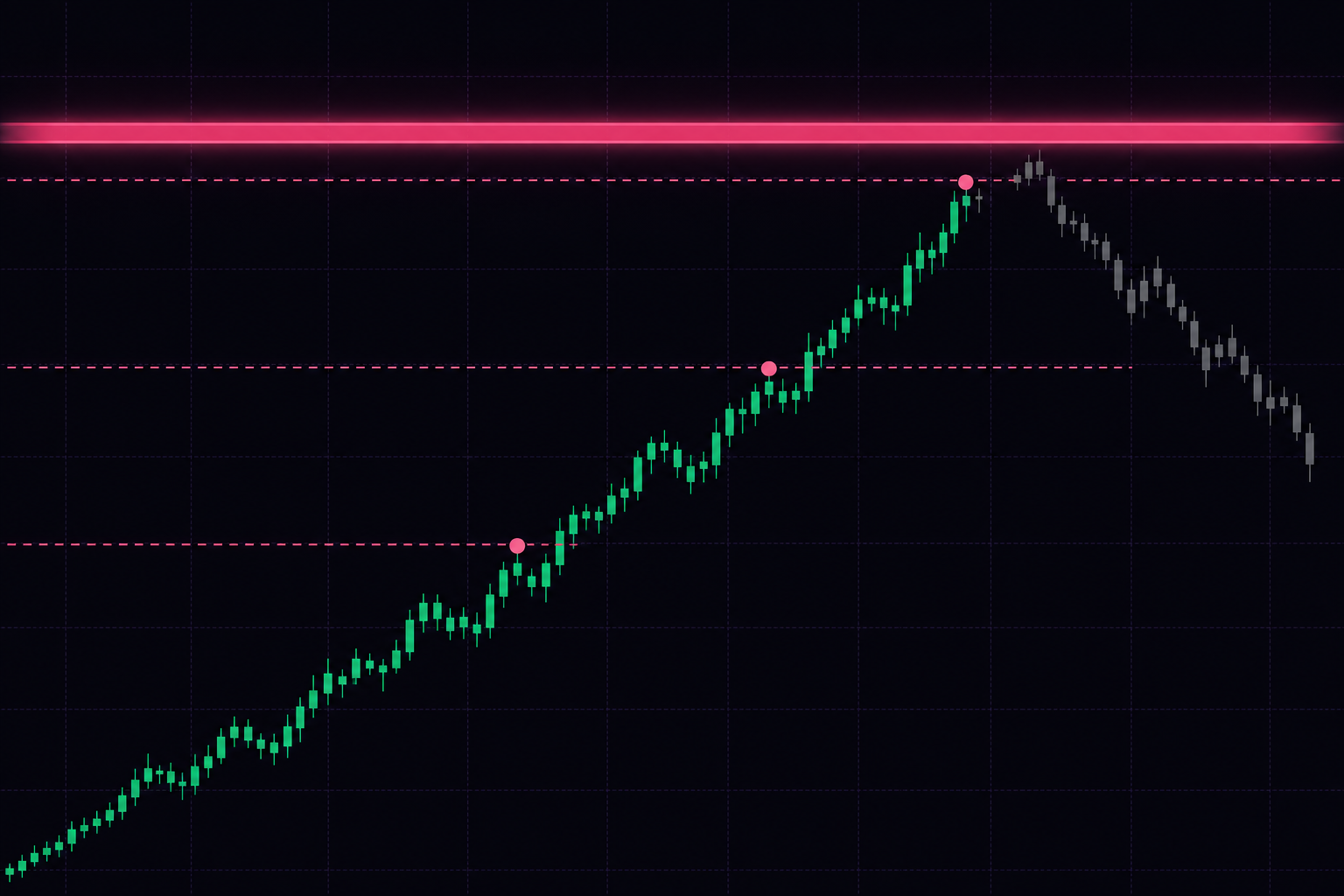
So don't set your take-profit at the milestone. Set it just below. When your percentage target happens to land near a round-number market cap, shift it under the level and let the wall's buyers fill your exit. Selling into strength at a place where everyone wants to transact is clean. Hoping price punches through the most-watched level on the chart, with your whole profit riding on it, is not a plan.
And ladder out. A third here, a quarter there. All-or-nothing exits turn one bad candle into your whole outcome. Partial exits mean you are never entirely wrong.
sizing: spreading kills returns, and so does concentration without a reason
Two failure modes, same root.
The first trader takes twenty positions because more shots must mean more hits. Now no single win matters, every rug stings, and the portfolio grinds down under fees and noise. Spreading kills returns.
The second trader puts half the account into one coin because they are sure. The market does not care that they are sure.
The answer is sizing by conviction with a hard ceiling. Small positions for ordinary setups. A meaningfully larger one — never a reckless one — when everything lines up at once: clean holders, real volume, structure breaking up, entry in the zone. Those confluences are rare. When they appear, they should move the needle. When they don't, stay small, and let the risk on any single trade stay at a level where being wrong is a line item, not an event.
do less when the market gives less
The trenches have weather. Some weeks, fresh launches top at $10M and everything with a pulse runs. Other weeks, the best launch of the day dies at $80K, and every entry is a donation.
Ask the regime question before every session: how high are fresh launches topping right now? If the answer is "not high," the correct position size is smaller, the correct standards are stricter, and the correct number of trades is close to zero. Forcing trades in a dead market is not discipline, it is boredom wearing discipline's clothes. Protecting capital until conditions return is a position too — usually the best-paying one available.
keep score, and obey your own notes
After every closed trade, write one sentence: what did this trade teach. Not a diary — a rule. "Don't chase after the second leg." "The fresh-wallet check would have caught this." Then, and this is the part almost nobody does, enforce your own rules. A lesson you write down and override the next week is not a lesson. It's decoration. If a note has proven itself five times, it stops being advisory. It votes on the next trade whether you're in the mood to hear it or not.
the checklist
Before entering, in order:
And while holding: would you buy it now, is your exit sitting just under the wall, and are you obeying your own notes.
the honest ending
Nothing above is secret. Most of it has been written down, in some form, by every trader who survived long enough to write. The problem was never knowing. The problem is doing it — at 3am, on the fourth coin of the night, while the chart is moving and the group chat is screaming and every instinct you have is the exact instinct the operator on the other side is farming.
That gap between knowing and doing is why we built Parasol. The engine runs this entire guide — the funding traces, the fresh-wallet checks, the fee math, the botted-chart patterns, the vamp lookups, the structure gates, the retracement zones, the thesis reviews, the ladders under the walls, the regime throttle — on every candidate token, every cycle, without moods and without a group chat.
You can do all of this by hand. This guide is enough. Or you can let something that never gets tired do it for you.
it sees what you can't.
Parasol is an autonomous trading engine for Solana. get access, or start with the free position sizing calculator — the checklist works better when the sizing does too. Nothing in this guide is financial advice.